
Punta Cana Backcountry: The Ultimate Explorer's Guide
Discover the hidden geography, secret cenotes, and lush jungle trails of Punta Cana's rugged interior on an off-road buggy expedition.
Punta Cana Backcountry: The Ultimate Explorer's Guide
Step away from the luxury resorts and pristine beaches of the coastline, and you will discover a completely different side of the Dominican Republic. The tropical humidity hangs thick in the air, carrying the earthy scent of rain-soaked red clay, dense palm fronds, and flowering wild orchids. This is the untamed backcountry of Punta Cana and the Anamuya region—a landscape shaped by ancient limestone geography, hidden subterranean aquifers, and generations of rich agricultural heritage. For curious backpackers, adventurous families, and wilderness explorers, this remote interior offers an authentic Caribbean experience that standard tour buses and rental cars can never reach. Because ordinary vehicles are strictly barred from these private trails, navigating the rugged terrain behind the wheel of a high-performance off-road buggy is the only way to witness these hidden geographic marvels firsthand.
The Geological Wonders: Karst Limestone & Subterranean Cenotes
Punta Cana's inland geography is defined by extensive karst topography. Over thousands of years, acidic rainwater has dissolved the porous limestone bedrock, carving out a vast network of underground caves, subterranean rivers, and crystal-clear freshwater cenotes. These hidden pools served as vital water sources for the indigenous Taino people centuries ago.
When exploring these subterranean wonders, visitors descend from the humid jungle canopy into cool, echoing caverns illuminated by natural light shafts. The water inside these cenotes is exceptionally pure, filtered naturally through layers of ancient limestone rock. Swimming in these sacred subterranean pools provides a serene contrast to the dusty, high-velocity dirt tracks found on the surface.
Generational Agricultural Traditions in the Jungle
Beneath the dense canopy of shade-grown cacao trees and towering coconut palms lies a living agricultural legacy. Generations of rural Dominican farmers have cultivated the island's fertile volcanic soil using time-honored traditional methods.
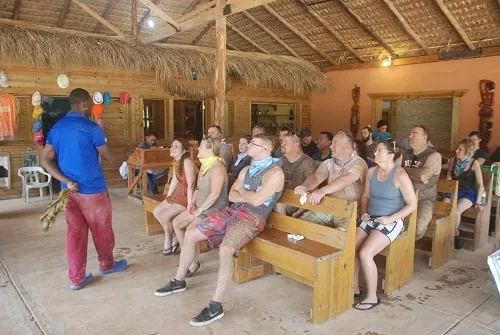
During an inland expedition, travelers can witness the meticulous process of shade-grown coffee harvesting and stone-ground cacao roasting. Unlike industrial mass production, local artisans ferment cacao beans in wooden boxes, dry them under the Caribbean sun, and grind them by hand to create rich, organic chocolate. Visitors also have the unique opportunity to sample traditional Mamajuana—an herbal elixir brewed from native tree bark, roots, herbs, and soaked in red wine, rum, and honey.
 Wild Tiger Official
Tropical Weather & The Science of Red Clay Trails
The climate of the eastern Dominican Republic is distinctly tropical, characterized by warm temperatures year-round and sudden afternoon rain showers. These tropical downpours are the secret behind the region's legendary off-road driving conditions.
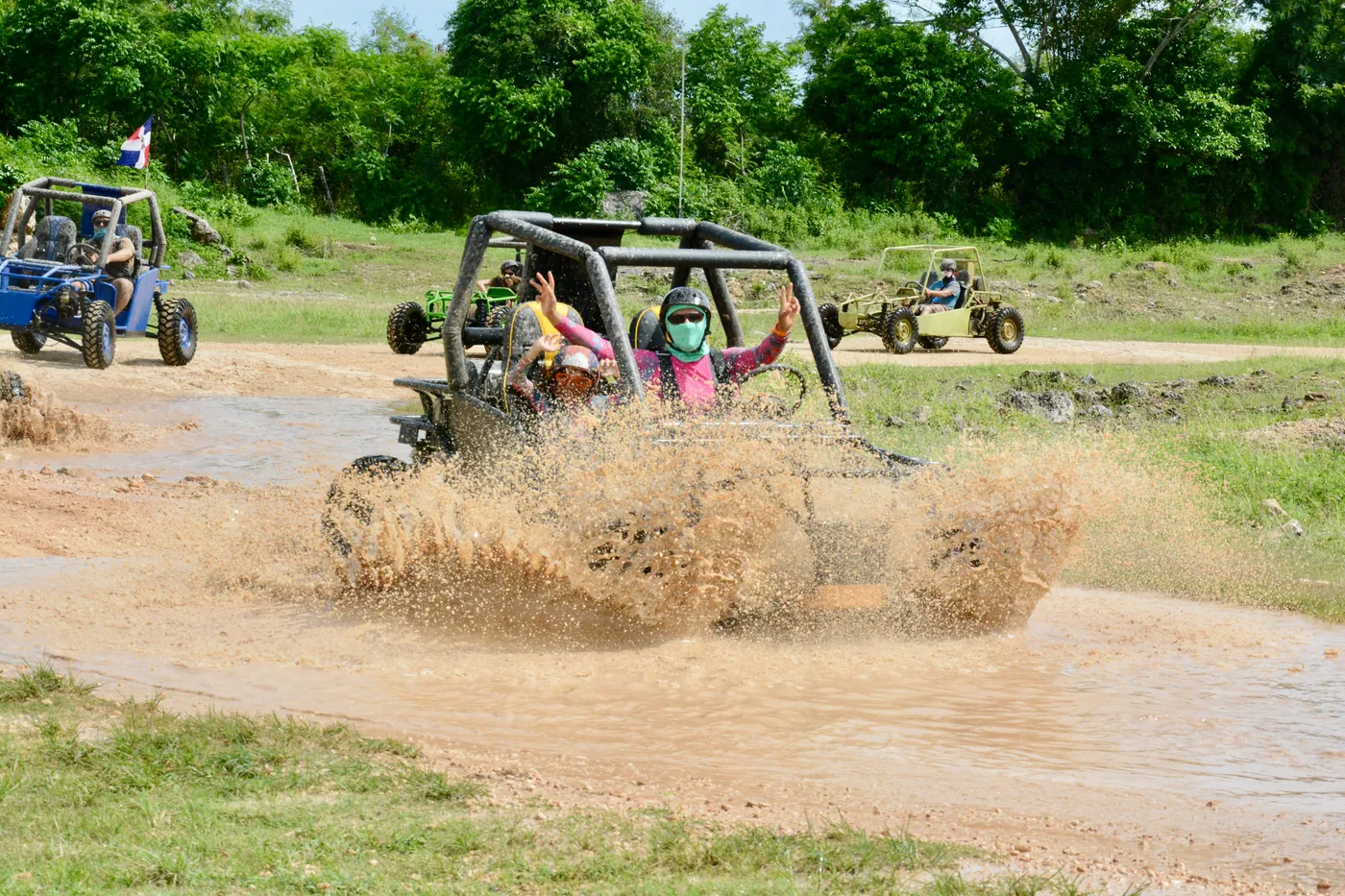
When dry, the local trails consist of packed dirt and loose gravel. However, once a tropical rainstorm passes, the famous red clay soil transforms into deep, slick mud tracks and massive puddles. This dynamic weather turns an ordinary drive into an exhilarating, high-splash off-road obstacle course.
| Weather Condition | Trail Consistency | Driving Experience | Recommended Gear |
|---|---|---|---|
| Dry Season | Dusty, loose gravel, packed dirt | High-speed drifting, dusty visibility | Sunglasses, bandana, lightweight clothes |
| Tropical Rain | Slick red clay, deep mud pits | Maximum splash factor, traction control | Old clothes, secure footwear, waterproof bag |
| Post-Storm | Puddles, riverbed crossings | Immersive water splashes, technical driving | Quick-dry apparel, change of clothes |
Essential Field Gear & Safety Checklist
Navigating high-humidity tropical environments and mud-soaked trails requires proper preparation. Whether you are driving solo or exploring with family, having the right equipment ensures a safe and comfortable adventure.
The Ultimate Adventure Bridge: Why Buggies Rule the Backcountry
Punta Cana's secret trails, abandoned quarries, and hidden cenotes are entirely inaccessible to standard rental cars, tour buses, and taxis. The narrow jungle paths, rocky riverbeds, and deep mud pits require specialized suspension, high torque, and robust roll cages.
This is precisely why booking an off-road buggy expedition is the ultimate way to explore the Dominican interior. With guaranteed hours of pure trail driving across private terrain, explorers can experience the thrill of tackling abandoned quarry speed tracks, splashing through riverbeds, and arriving directly at secluded natural caves.
Fleet options cater to every type of traveler:
- Single Buggy ($120.00): Perfect for solo drivers (18+) wanting full control and maximum throttle response.
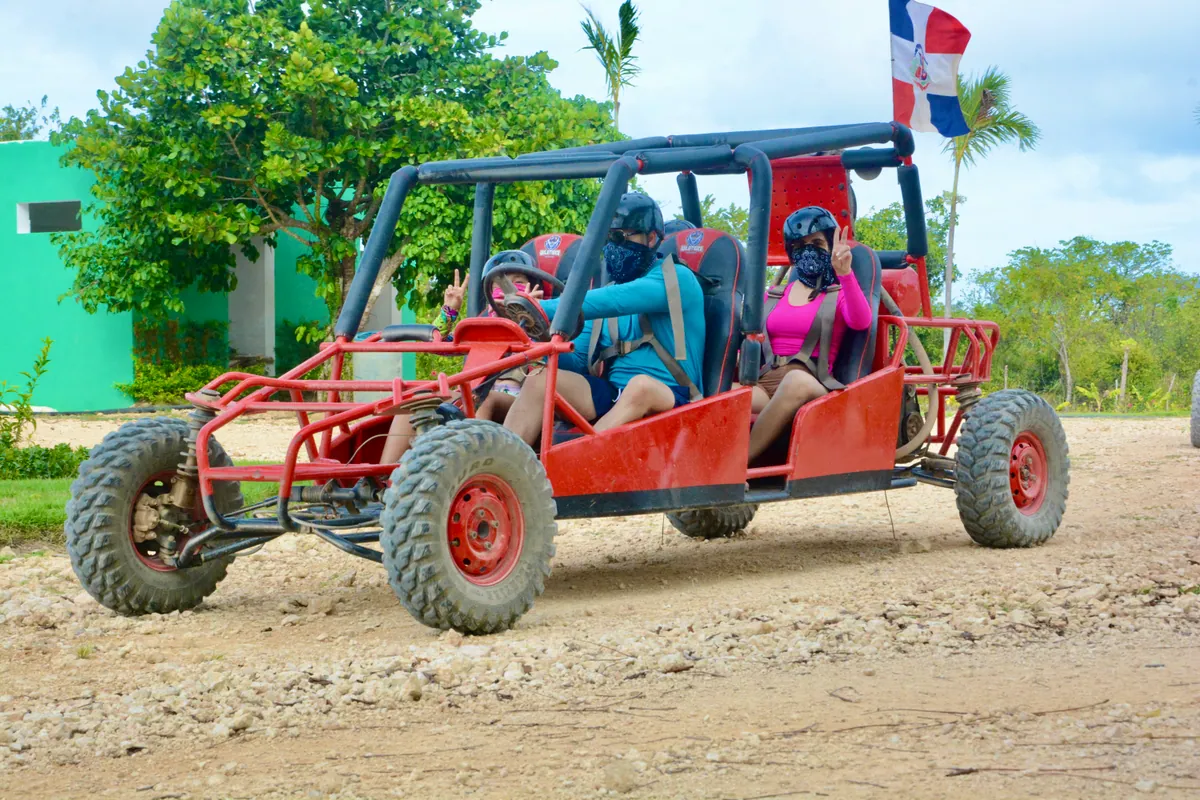
- Double Buggy ($85.00/person): Ideal for couples or friends sharing a side-by-side adrenaline rush.
- Family Buggy ($68.75/person): Specially engineered 4-seater heavy-duty vehicles allowing families with children to share the mud-splashing excitement safely.
 Wild Tiger Official
Frequently Asked Questions
What are the age and license requirements for driving a buggy?
Drivers must be at least 18 years old. While a formal driver's license is not always mandatory for private off-road circuits, drivers must be confident behind the wheel. Passengers must be at least 100 cm tall to ensure they fit securely within the vehicle restraints.
Are pregnant women allowed to participate in buggy tours?
No. For safety reasons, pregnant women are strictly prohibited from participating in off-road buggy excursions due to the bumpy terrain, sudden vibrations, and physical nature of the trail ride.
What is included in a standard off-road buggy tour?
Excursions typically include a minimum of 2 full hours of off-road trail driving through private jungle terrain, visits to a private natural cave with freshwater cenotes for swimming, stops at an abandoned quarry speed track for high-torque drifting, and cultural tastings of organic coffee, cacao, cigars, and Mamajuana.
What shoes should I wear on the tour?
Closed-toe shoes or sturdy sneakers are strictly mandatory. Sandals, flip-flops, and bare feet are not permitted on the vehicles or trails for safety reasons.